705 O’Porto Hotel: From Development to Operation
March 16, 2026
705 O'Porto Hotel: From Development to Operation
The project that gave rise to the 705 O’Porto Hotel began long before the hotel opened. Initially developed under the name THotel, the project emerged during a phase dedicated to planning, architectural development, and construction of a new urban building in Porto.
From the earliest stages of the project, Teppe assumed a transversal role in the development process, participating in the coordination of concept, project development, construction oversight, and preparation for future hotel operation. This integrated approach reflects Teppe’s development model, in which architecture, construction, and operation are conceived as part of a continuous and coherent process.
The project was designed as a contemporary hospitality asset capable of integrating into Porto’s urban fabric while contributing to the regeneration and activation of its surroundings.
Urban Context and Regeneration
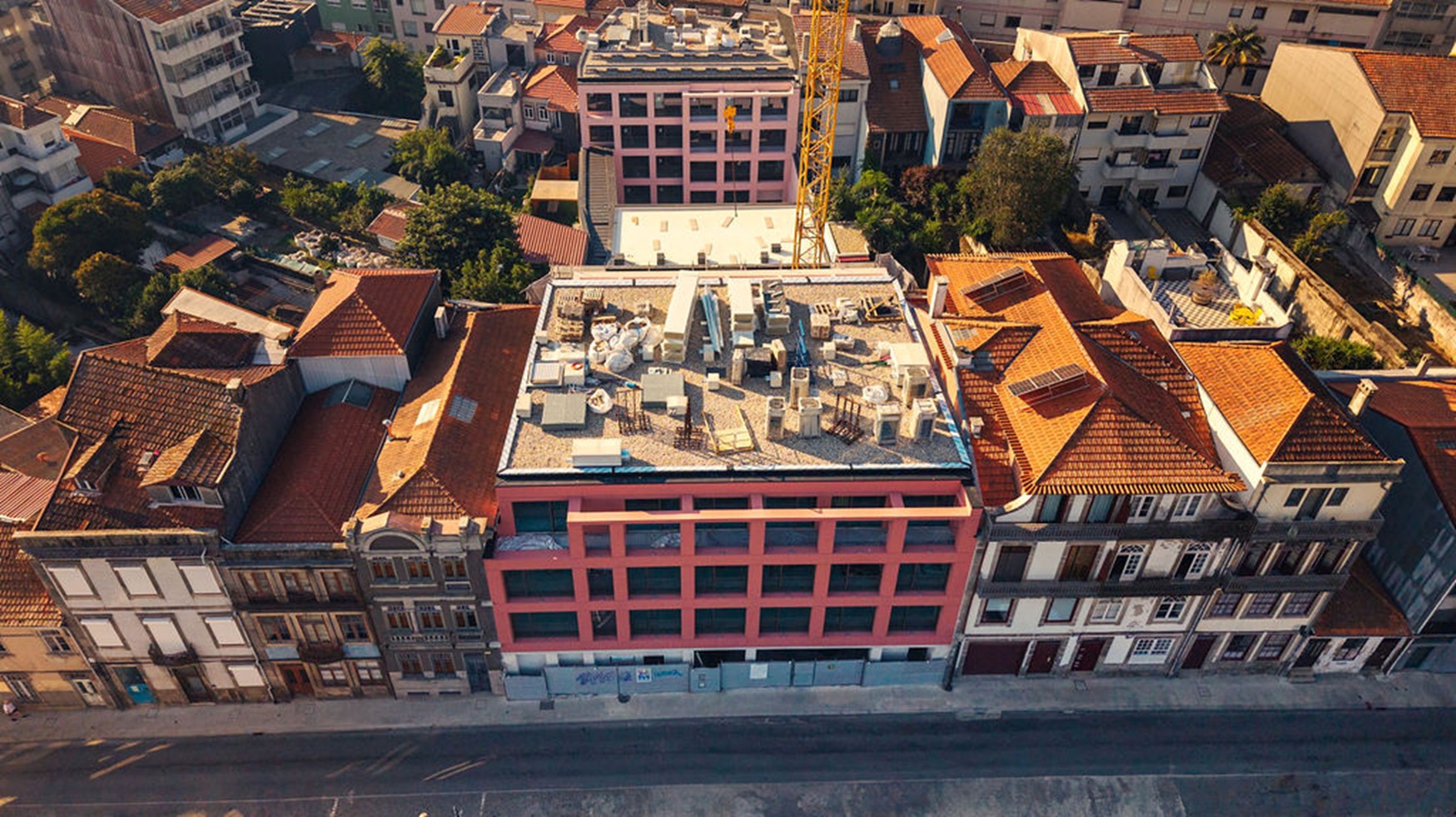
The development is located between Rua da Maternidade and Rua do Breiner, in a consolidated area of Porto close to the Palácio de Cristal gardens and the Super Bock Arena.
The site sits within the Cedofeita Urban Rehabilitation Area, a planning framework aimed at promoting urban regeneration through the rehabilitation of existing structures and the introduction of new buildings capable of revitalizing the surrounding urban environment.
Within this context, the project responded to the opportunity to develop a previously underused urban plot with two street fronts, creating a new building that respects the scale and alignment of the surrounding architecture while introducing a contemporary architectural language.
Architectural Concept
The architectural proposal was developed around a volumetric composition composed of two main buildings facing the street, one on Rua da Maternidade and another on Rua do Breiner, connected by a central body located within the interior of the block.
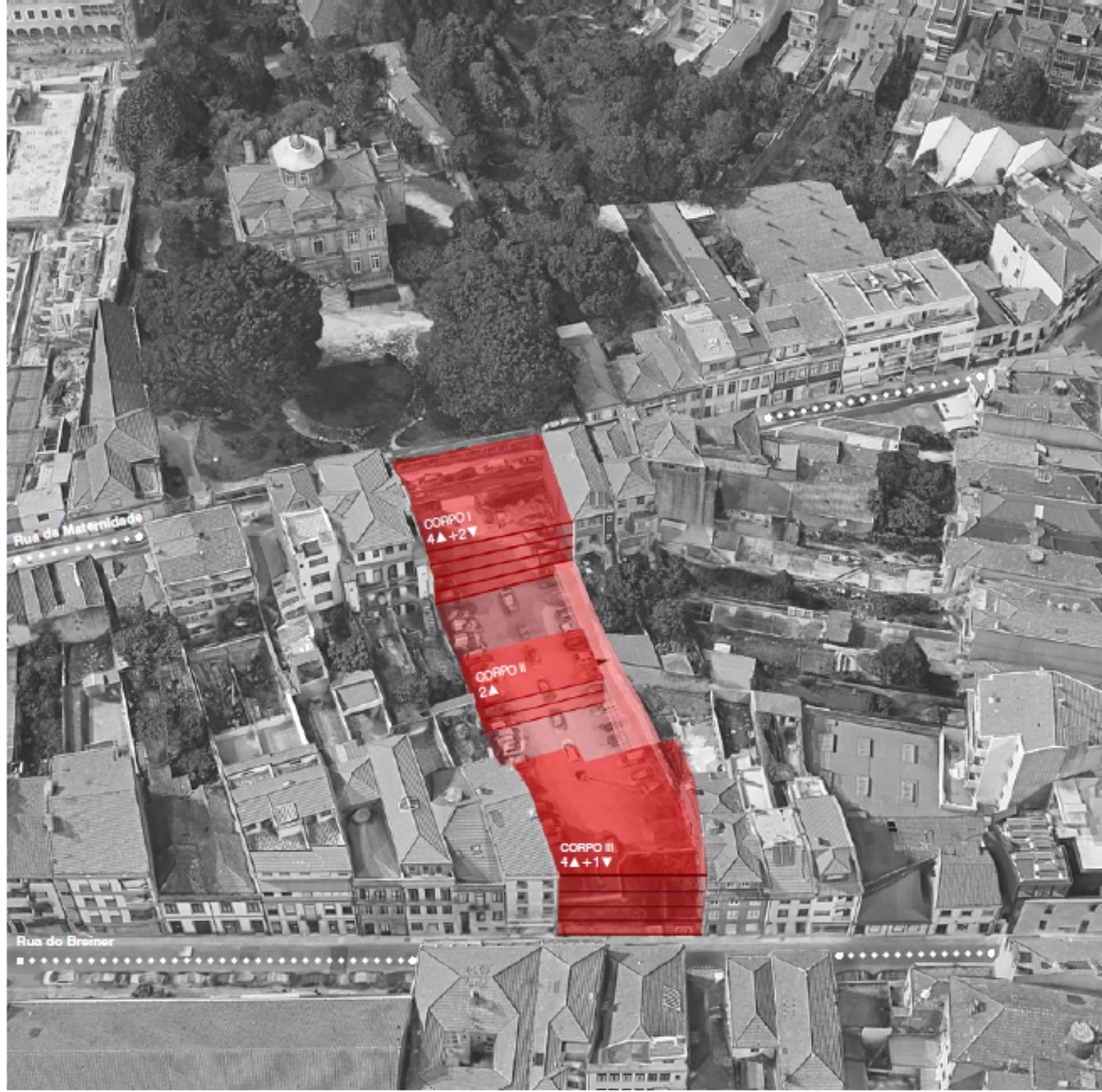
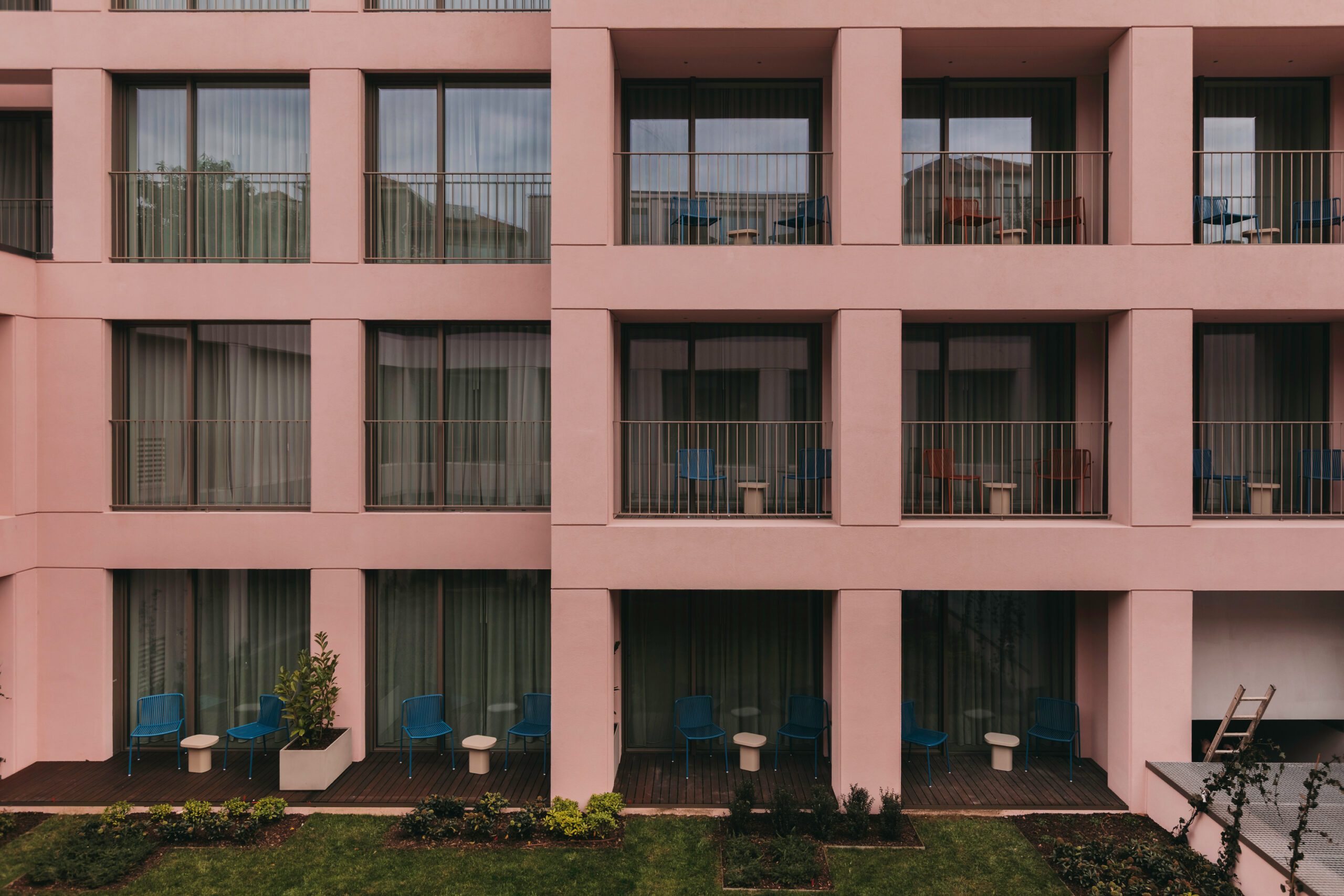
This configuration allows the project to take advantage of the two urban fronts while creating an interior courtyard that functions as a transitional space between public and private areas of the hotel.
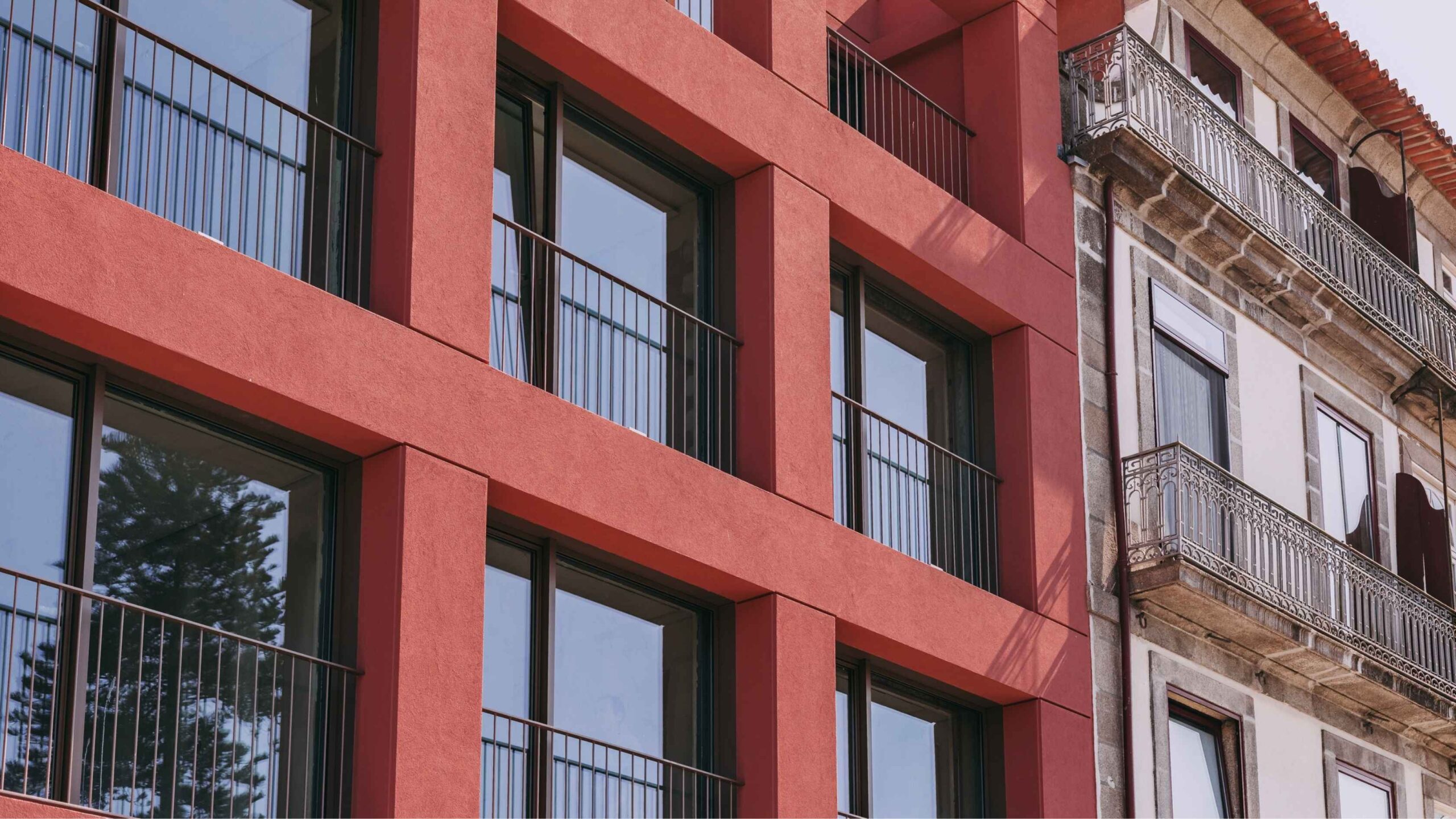
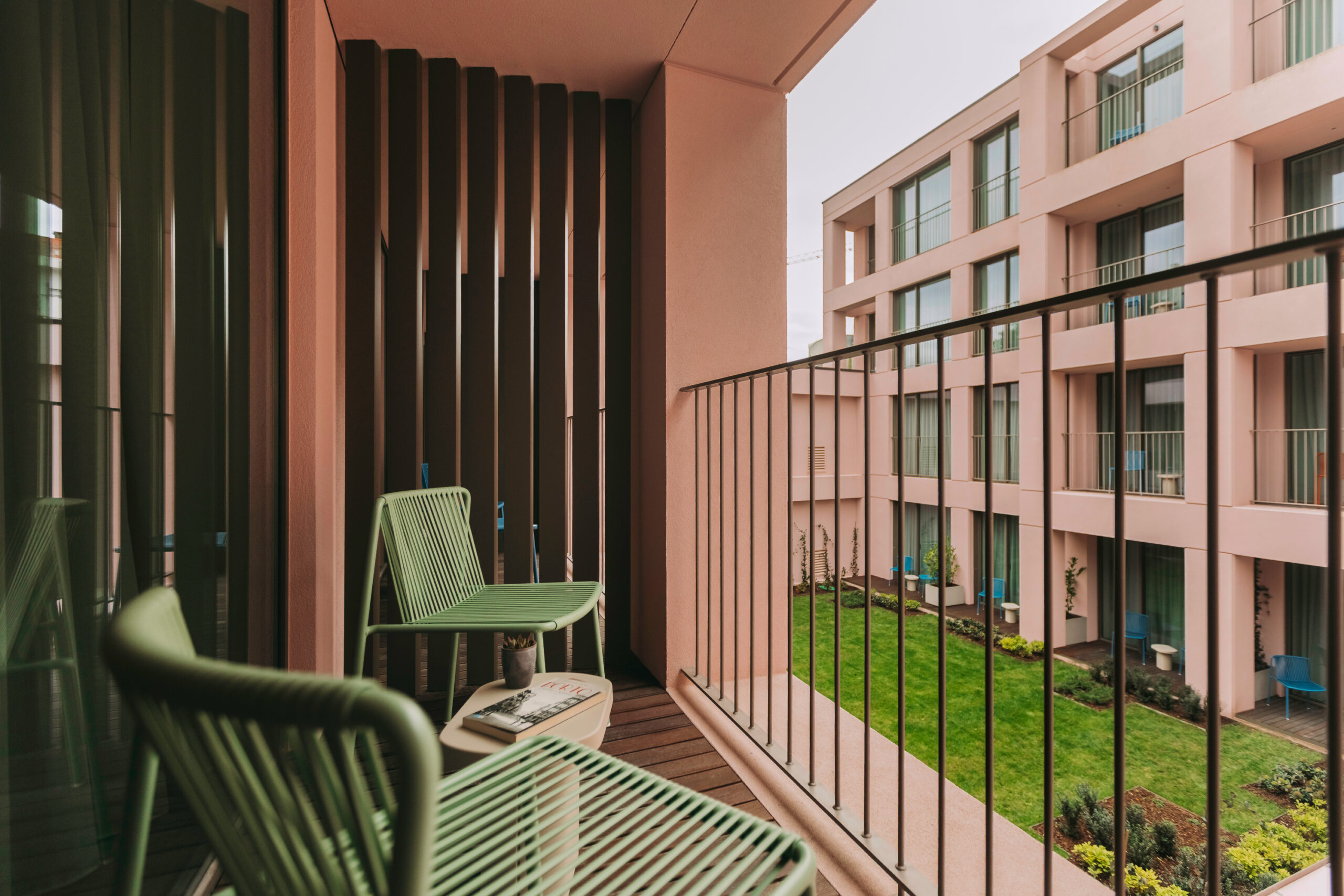
The architectural language is defined by a rational and geometric façade system, where exposed concrete structures create a rhythmic grid that acts simultaneously as a compositional element and as solar protection. This brise-soleil structure frames the glazed surfaces of the rooms, creating a dynamic relationship between light, shadow, and interior spaces.
At street level, the ground floors are designed to establish a stronger connection with the surrounding city, incorporating transparent elements and visual permeability that allow the interior courtyard and common areas to relate to the public space.
Program and Spatial Organization
The building was designed to accommodate a four-star hotel with a total of 85 rooms, distributed across the different volumes of the building.
The hotel includes:
- Reception and lobby areas connected to the main urban entrance
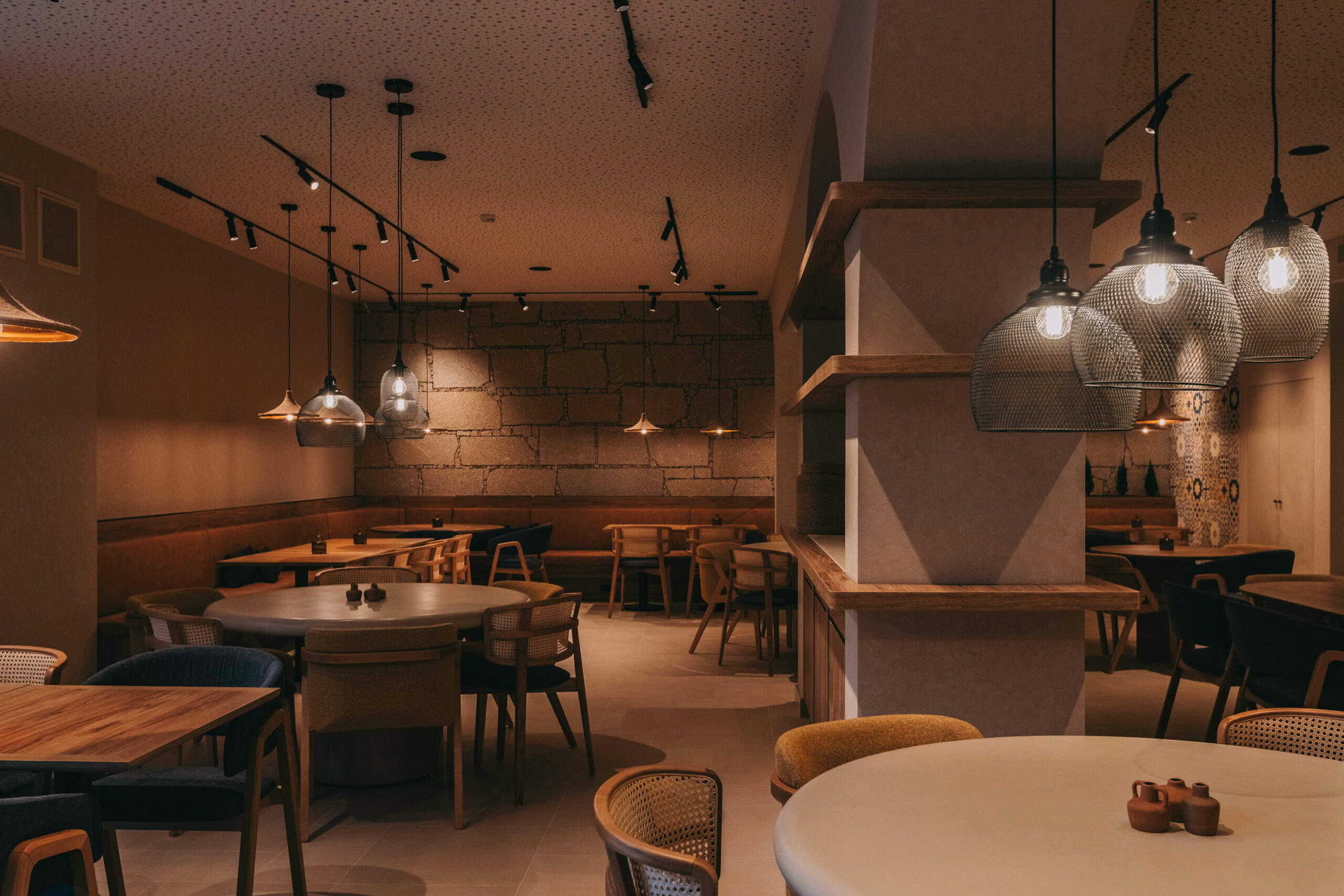
- Restaurant and breakfast room
- Bar and lounge areas
- Service and technical areas
- Interior courtyard and landscaped outdoor spaces
The organization of spaces carefully separates guest circulation from service circulation, ensuring operational efficiency and maintaining a fluid guest experience throughout the building.
The interior courtyard plays a central role in the spatial organization, acting as both a source of natural light and a landscaped area that enhances the relationship between interior and exterior spaces.
Construction and Development Process
The construction phase required careful coordination between architectural, engineering, and technical teams, particularly given the complexity of the site and the presence of two street fronts with different elevations.
The project includes several underground levels dedicated to service areas and technical infrastructure, allowing mechanical systems and operational functions to be integrated without impacting the building’s architectural expression.
The structural system and façade design were developed to ensure both durability and architectural consistency, using exposed concrete as the predominant material across the building’s exterior envelope.
Throughout the development process, Teppe ensured that construction decisions remained aligned with the project’s original concept, maintaining coherence between design intentions and the final built result.

An Integrated Development Model
Following the completion of construction, the project transitioned from its development phase, under the name THotel, into a fully operational hospitality asset.
The hotel was integrated into Hotels Seven O Five, the hospitality brand created by Grupo Teppe to manage and operate hotel assets developed by the group.
The 705 O’Porto Hotel will illustrate Teppe’s approach to hospitality development: a model in which concept, architecture, construction, and operation will be conceived as parts of a single integrated process. By overseeing the full lifecycle of the project, from urban development to hotel operation, Teppe ensures consistency between the initial vision and the long-term performance of the asset. The project will stand as both a hospitality destination and an example of Teppe’s commitment to creating urban developments that combine architectural quality, operational functionality, and long-term value.